


News : The global imperative for a transition to renewable energy frequently precipitates a "Green-on-Green" dilemma, where the drive for carbon neutrality clashes with the preservation of local biodiversity. The NTPC Renewable Energy Limited’s proposed solar expansion in Gujarat’s Kachchh region epitomizes this tension.
According to the source context, the project seeks to develop approximately 4,500 acres across 16 villages. This development pits state-led energy objectives against the ecological integrity of a Ramsar-listed landscape and the traditional rights of pastoral communities. The strategic challenge lies in conducting a rigorous Environmental Impact Assessment (EIA) that accounts for the non-linear value of grasslands, ensuring that national energy security does not come at the cost of irreversible ecological and social dispossession.
Biodiversity and the Chhari Dhand Ramsar Site
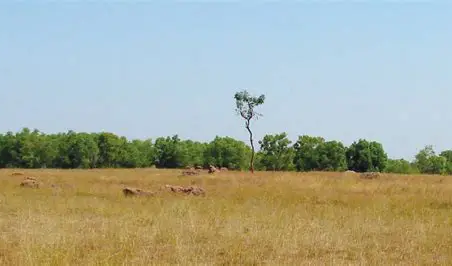
The Banni Grasslands are not merely vacant land; they represent a complex, arid ecosystem that serves as a cornerstone for both regional biodiversity and the pastoral economy. Understanding the specific floral and faunal composition of this region is essential for analyzing the impact of industrial encroachment.
Geographical and Biological Significance:
- Scale and Status: Banni is recognized as one of Asia’s largest natural grasslands, functioning as a primary carbon sink and a shield against desertification in the Kachchh region.
- Nutritious Floral Diversity: The ecosystem is home to over 70 species of nutritious grasses, which have evolved to thrive in saline and arid conditions.
- Pastoral Sustenance: This specialized vegetation supports a robust population of livestock, specifically adapted breeds of camels, buffaloes, sheep, and goats, which form the backbone of the local economy.
Chhari Dhand Wetland Conservation Reserve
A critical sub-component of this landscape is the Chhari Dhand Wetland Conservation Reserve. The term "Dhand" refers to a seasonal wetland, and this specific site holds the prestigious status of a Ramsar Site. It is a major node in the Central Asian Flyway, serving as a mandatory stopover and breeding ground for thousands of migratory birds. The proximity of solar infrastructure to this reserve threatens the delicate hydrological and biological balance required to sustain these avian populations.
The transition of this ecologically rich landscape into an industrial solar park risks fragmenting a contiguous habitat that has remained largely intact for centuries.
Critical Analysis: Solar Expansion vs. Biodiversity Preservation
The conflict in Banni underscores the irony of renewable energy projects potentially causing localized environmental degradation. This "Green-on-Green" conflict requires a nuanced analysis of how clean energy infrastructure impacts avian and terrestrial ecology.
The "So What?" of Industrial Solar Expansion:
- Habitat Fragmentation across 16 Villages: The project’s vast scale (4,500 acres) effectively bisects the landscape. The installation of fences, roads, and transmission lines disrupts the movement of terrestrial wildlife and fragments the grazing corridors essential for pastoralism.
- Avian Hazards and the "Lake Effect": Solar panels present a unique threat to migratory birds. Large arrays of panels can create a "Lake Effect," where birds mistake the reflective, shimmering surfaces for water bodies. This disorientation leads to fatal collisions. Furthermore, light pollution and increased human activity disrupt the nesting and nocturnal behaviors of rare species.
- Eco-sensitive Encroachment: The project’s location near the Chhari Dhand reserve compromises the buffer zones necessary for the wetland's health. The resulting noise and dust from construction can lead to a significant decline in avian visitor numbers, threatening the status of the Ramsar site.
This ecological disruption is inextricably linked to the socio-legal challenges regarding land tenure and the rights of those who have historically stewarded this land.
Socio-Legal Dimensions: Pastoral Rights and the Forest Rights Act
The Banni ecosystem is the foundation of the cultural identity and economic survival of the Fakirani Jat community and other local pastoralists. Their relationship with the land is not merely economic but deeply spiritual and ancestral.
Impact on Traditional Rights:
- Livelihood Displacement: The conversion of nearly 4,500 acres of grazing land into an industrial zone directly threatens the traditional pastoral way of life, potentially leading to the forced migration of livestock and families.
- Cultural Dispossession: Local communities have raised alarms regarding the loss of cultural spaces, including ancestral graveyards, which are located within the proposed project area.
Legal Failures and the Forest Rights Act (FRA), 2006: A central point of contention is the weak implementation of the Forest Rights Act, 2006. The Act contains provisions for Community Forest Rights (CFR), which empower communities to manage and protect their traditional grazing lands. However, in the Banni context, land is being diverted for industrial use before these rights have been fully recognized or settled. This bypasses the legal safeguard that requires the informed consent of the Gram Sabhas for the diversion of forest and pasture lands. For sustainable development to occur, the government must adopt a rights-based approach that prioritizes the settlement of CFRs over the immediate demands of industrial expansion.
Examination Drill: High-Yield MCQs
Question 1: With reference to the Banni Grasslands, consider the following statements:
- It is one of Asia’s largest natural grasslands, located in the Kachchh region of Gujarat.
- The ecosystem supports over 70 species of nutritious grasses adapted to arid conditions.
- The land is traditionally managed as a Common Property Resource (CPR) by pastoral communities.Which of the statements given above are correct?
- A) 1 and 2 only
- B) 2 and 3 only
- C) 1 and 3 only
- D) 1, 2, and 3
Question 2: The "Chhari Dhand" region is frequently in the news. Which of the following best describes its significance?
- It is a seasonal wetland and a designated Ramsar Site.
- It serves as a critical habitat for migratory birds along the Central Asian Flyway.
- It is a freshwater lake located in the Himalayan foothills.Select the correct answer using the code given below:
- A) 1 only
- B) 1 and 2 only
- C) 2 and 3 only
- D) 1, 2, and 3
Question 3: The "Fakirani Jat" community, recently mentioned in the context of land rights conflicts, is primarily associated with:
A) Shifting cultivation in the North-East.
B) Traditional pastoralism and livestock grazing in Gujarat.
C) Artisanal fishing along the Konkan coast.
D) Traditional weaving and textile arts in Rajasthan.
Question 4: Regarding the implementation of the Forest Rights Act (FRA), 2006 in the Banni region, what is the primary legal contention?
A) The Act does not apply to grasslands as they are not classified as "forests."
B) The diversion of land for industrial projects is occurring without the settlement of Community Forest Rights (CFR).
C) The Act only recognizes individual land titles, not communal grazing rights.
D) The local communities are not classified as Scheduled Tribes under the Act.
Question 5: In the context of solar energy projects in eco-sensitive zones, the "Lake Effect" refers to:
A) The cooling of solar panels due to proximity to water bodies.
B) The increased efficiency of panels due to water reflection.
C) The disorientation of birds who mistake solar arrays for water, leading to collisions.
D) The salinization of soil caused by panel runoff entering the water table.
Answer Key and Justifications
- D (1, 2, and 3): All statements are correct. Banni is a massive natural grassland in Kachchh, possesses 70+ nutritious grass species, and serves as a CPR for local communities.
- B (1 and 2 only): Statement 1 is correct (seasonal wetland/Ramsar site); Statement 2 is correct (Central Asian Flyway); Statement 3 is incorrect as it is located in the arid Kachchh region, not the Himalayas.
- B (Traditional pastoralism and livestock grazing in Gujarat): The source identifies the Fakirani Jat as a pastoral community in Banni that grazes buffaloes, camels, and goats.
- B (The diversion of land for industrial projects is occurring without the settlement of Community Forest Rights): The core legal concern is that industrial use is being prioritized before the rights-recognition process mandated by the FRA 2006 is complete.
- C (The disorientation of birds who mistake solar arrays for water, leading to collisions): This is a specific technical hazard where the reflective nature of panels mimics water surfaces, causing avian fatalities.
Click here to
Read More
Are you sure?
You want to delete this comment..!
Remove
Cancel